Finding steady clients remains the biggest challenge for freelancers in 2026. While talent and expertise matter, sustainable income depends on effective sales tactics that consistently attract the right clients. 62% of freelancers report income volatility due to lack of systematic client acquisition processes. This article presents seven actionable sales tactics backed by recent research, designed specifically for independent service providers who need to build reliable client pipelines without relying solely on referrals and word of mouth. You’ll discover proven strategies to transform sporadic project work into predictable revenue.
Table of Contents
- How To Evaluate Effective Sales Tactics For Freelancers
- Referral Strategies: How To Leverage Happy Clients For More Business
- Using Cold Emailing Smartly To Find Ideal Clients
- Building And Leveraging A Systematic Sales Pipeline
- Positioning And Trust-Building Tactics To Close More Clients
- Explore Expert Resources To Boost Your Freelance Sales
- Frequently Asked Questions
Key takeaways
| Point | Details |
|---|---|
| Sales pipelines reduce income volatility | Systematic processes smooth revenue gaps and create predictable client flow |
| Referral clients stay longer | Referred customers have 37% higher retention than clients from other channels |
| Follow-ups boost win rates | Consistent follow-up schedules can raise conversion rates by up to 30% |
| Target urgent problems | Clients with ‘bleeding neck’ issues respond faster and pay better |
| Cold emailing delivers ROI | Strategic outbound emails can generate high-value retainers from single messages |
How to evaluate effective sales tactics for freelancers
Before diving into specific tactics, you need criteria to separate methods that actually work from those that waste time. Effective sales tactics for freelancers share three characteristics: they’re repeatable, they build trust before the sale, and they target clients with urgent problems.
A repeatable process means you can execute the same steps consistently to generate predictable results. 62% of freelancers report income volatility precisely because they lack systematic approaches. When you depend on random referrals or sporadic networking, you’re gambling with your income. The best tactics become habits you can schedule and measure.
Trust and credibility must exist before sales conversations begin. Clients buy outcomes, not hours, so your tactics should demonstrate expertise and reliability upfront. This means sharing knowledge, solving small problems publicly, and maintaining consistent visibility in spaces where your ideal clients gather.
Finally, target clients with ‘bleeding neck’ problems. These prospects face urgent pain points they need solved immediately, making them motivated buyers who value speed and expertise over price. When you avoid revenue gaps, you focus energy on prospects most likely to convert quickly.
Consider these evaluation criteria:
- Can you execute this tactic weekly without major time investment?
- Does it position you as an expert before asking for business?
- Does it reach clients actively seeking solutions right now?
- Can you track and improve results over time?
Tactics that meet all four criteria deserve your attention. Those that fail even one should be deprioritized or eliminated entirely.
Referral strategies: How to leverage happy clients for more business
Referrals remain the highest-quality lead source for freelancers because they come pre-sold on your capabilities. Referred customers have a 37% higher retention rate than clients acquired through other channels, and they typically require less convincing during sales conversations.
The problem is most freelancers treat referrals as lucky accidents rather than systematic outcomes. You need to engineer referral moments into your client workflows deliberately. Ask for referrals during peak happiness moments, typically right after delivering exceptional results or solving a major problem. Clients feel most generous when you’ve just proven your value.
Make referrals a standard offboarding step. When projects end successfully, include a brief referral request in your final invoice or wrap-up email. Frame it as helping other businesses solve similar problems rather than asking a favor. Most clients want to help but simply forget unless prompted.
Build subtle referral incentives that maintain trust. Offering discounts or bonuses can work, but heavy-handed incentive programs feel transactional and may cheapen your expertise. Instead, consider providing extra value to both the referrer and new client, such as a complimentary strategy session or priority scheduling.
Track which clients generate the most referrals and analyze patterns. You might discover certain industries, project types, or client personalities naturally become referral engines. Double down on acquiring more clients matching those profiles.
Pro Tip: Create a simple referral email template you can personalize and send immediately after project wins. Speed matters because client enthusiasm fades quickly, so strike while satisfaction peaks.
Using cold emailing smartly to find ideal clients
Cold emailing gets a bad reputation because most freelancers execute it poorly. When done strategically, cold emailing can yield high ROI by directly reaching motivated prospects with urgent problems. The key is targeting and personalization, not volume.
Start by identifying prospects with ‘bleeding neck’ issues. These are companies or individuals facing immediate pain points your expertise can solve. LinkedIn Sales Navigator helps you build targeted lists based on job titles, company size, industry, and even recent company changes that signal potential needs.
Craft emails that solve problems, not promote yourself. Your first sentence should acknowledge a specific challenge the prospect likely faces. Your second sentence should hint at a solution or insight. Only then do you briefly mention your relevant experience. The entire email should stay under 100 words.
One freelance marketer landed a $5,000 monthly retainer from a single cold email by targeting SaaS companies that just raised Series A funding. She knew these companies needed demand generation fast but lacked internal expertise. Her email opened with “Congratulations on your Series A. Most founders discover their biggest bottleneck post-funding is qualified pipeline, not product.” She offered a free 20-minute audit call, and the prospect responded within hours.
Use these cold email principles:
- Research each prospect for 2-3 minutes to find a genuine personalization angle
- Lead with their problem, not your solution
- Include one clear, low-friction call to action
- Follow up 2-3 times with added value, not repeated asks
Pro Tip: Reference recent company news, LinkedIn posts, or industry trends to prove you’ve done homework. Generic templates get deleted immediately, but relevant context earns replies.
Track your cold email metrics to improve over time. Measure open rates, reply rates, and conversion rates separately. Most freelancers quit too early because they expect instant results, but cold emailing requires testing and refinement.
| Metric | Good Benchmark | How to Improve |
|---|---|---|
| Open Rate | 40-50% | Test subject lines, send times |
| Reply Rate | 10-15% | Improve personalization, shorten emails |
| Conversion Rate | 5-10% | Target better prospects, refine offer |
For proven approaches, explore 60 B2B sales triggers that boost relevance and replies, or review the complete 2026 guide to cold email campaigns for step-by-step implementation.
Building and leveraging a systematic sales pipeline
A sales pipeline transforms chaotic client hunting into a predictable growth engine. Without defined stages and consistent tracking, you’re flying blind and wondering why some months boom while others bust. Systematic follow-ups raise win rates by up to 30%, yet most freelancers skip this step entirely.

Define clear stages for your pipeline. A simple framework includes: Initial Contact, Discovery Call Scheduled, Proposal Sent, Negotiation, and Closed Won or Lost. Each stage represents a milestone that moves prospects closer to becoming paying clients. You need to know exactly how many prospects sit in each stage at any moment.
Schedule consistent follow-ups rather than relying on memory or motivation. Most deals die from neglect, not rejection. Set reminders to touch base with prospects every 3-5 days during active conversations, and every 2-3 weeks for longer-term opportunities. Each follow-up should add value through insights, examples, or answers to unspoken questions.
Track metrics that reveal pipeline health. Measure conversion rates between stages to identify bottlenecks. If 50% of discovery calls lead to proposals but only 10% of proposals close, your proposal process needs work. If you struggle booking discovery calls from initial contacts, your outreach messaging requires improvement.
Use a simple tool to manage your pipeline. You don’t need expensive CRM software. A spreadsheet with columns for prospect name, stage, last contact date, next action, and value works perfectly. The key is updating it weekly without fail.
“Your pipeline is your income forecast. When you can predict how many prospects enter each week and your average conversion rate, you can predict revenue three months out. That predictability changes everything for freelancers.”
Consider these pipeline best practices:
- Review your pipeline every Monday morning to plan outreach for the week
- Add at least 5 new prospects weekly to maintain flow
- Move stalled deals to a separate “nurture” category after 30 days
- Celebrate small wins like booked calls, not just closed deals
- Analyze why deals are lost to improve future approaches
For specialized guidance, explore client acquisition strategies for fractional executives that apply equally well to freelancers building systematic pipelines.
Positioning and trust-building tactics to close more clients
Closing clients starts long before sales conversations begin. Freelancers in 2026 must focus on building trust and credibility upfront to stand out in increasingly competitive markets. Positioning determines whether prospects see you as an expensive freelancer or an invaluable expert.
Clients buy outcomes, not hours, so define your value in terms of results delivered. Instead of “I provide social media management,” say “I help B2B SaaS companies generate qualified leads from LinkedIn.” The second version specifies who you serve and what outcome they get, making it immediately clear whether you’re relevant.
Maintain consistent expertise visibility to build familiarity before pitching. Share insights on LinkedIn, write articles addressing client pain points, or create simple frameworks that demonstrate your thinking. When prospects eventually need your services, they’ll remember you as the expert who’s been helping them all along.
Build trust well before sales conversations through micro-commitments. Offer free audits, quick wins, or strategy calls that let prospects experience your expertise risk-free. These small interactions prove competence and build confidence that you can deliver on larger promises.
Compare traditional promotion approaches with trust-building tactics:
| Traditional Promotion | Trust-Building Approach |
|---|---|
| Broadcast services to everyone | Share valuable insights publicly |
| Cold pitch immediately | Provide free value first |
| Focus on your credentials | Focus on client outcomes |
| Ask for meetings | Earn attention through expertise |
Position yourself strategically by understanding your ICP and personas, the foundation for effective sales and marketing. When you know exactly who you serve and what keeps them awake at night, your messaging resonates instantly.
Use these positioning tactics:
- Develop a clear one-sentence description of who you help and what outcome you deliver
- Share client success stories that highlight specific results, not just satisfaction
- Speak the language your ideal clients use, avoiding jargon they won’t understand
- Demonstrate expertise through free content before asking for paid work
Trust compounds over time. Prospects who’ve followed your work for months convert faster and negotiate less on price because they already believe in your capabilities. This is why consistent visibility matters more than sporadic promotional bursts.
Explore expert resources to boost your freelance sales
Building a reliable client pipeline requires more than tactics. You need proven frameworks, templates, and step-by-step processes that eliminate guesswork. If you’re ready to stop relying on referrals and word of mouth, structured guidance can compress months of trial and error into weeks of focused implementation.
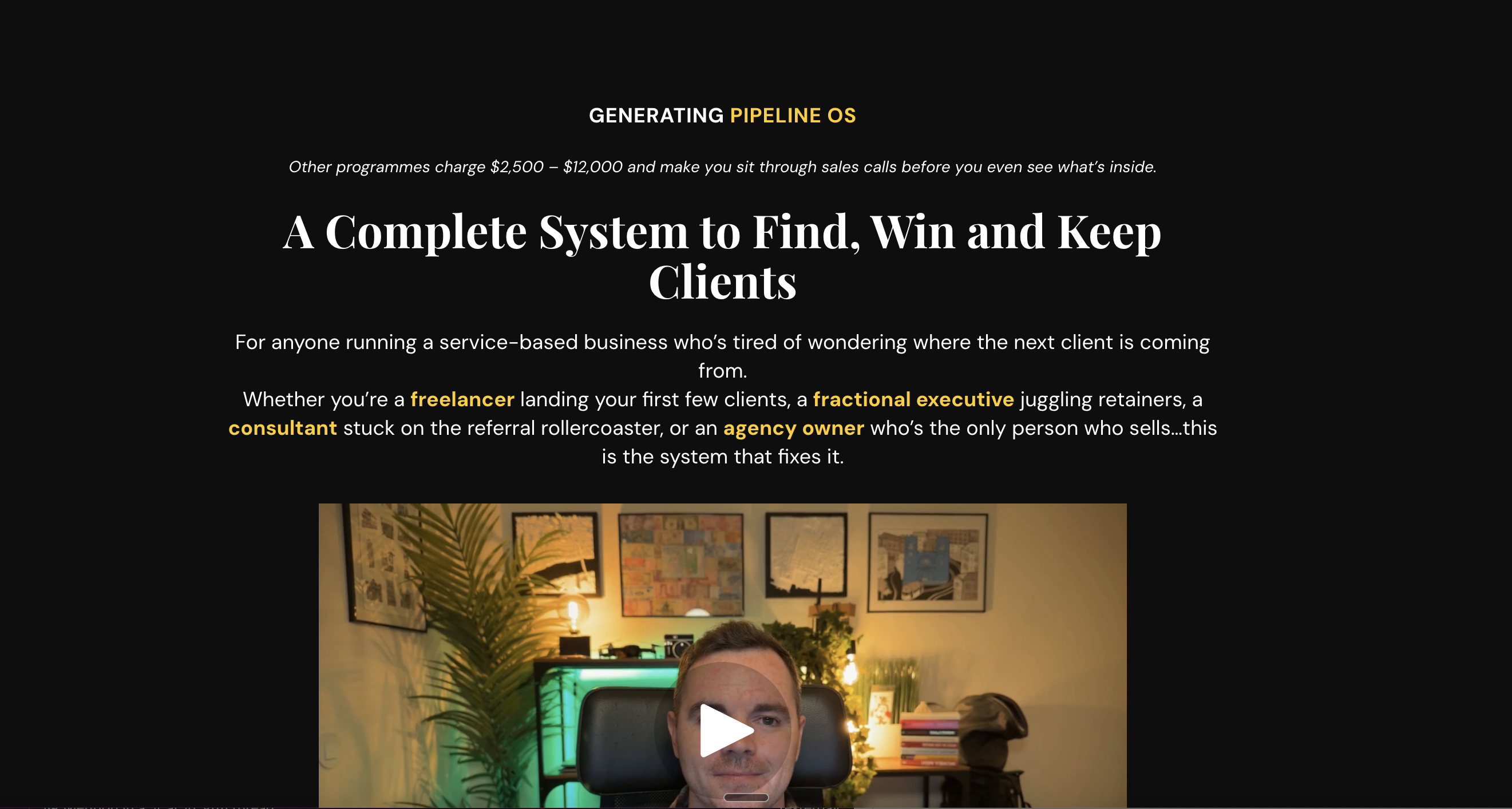
The Generating Pipeline OS provides 20 lessons covering positioning, outbound outreach, sales execution, and delivery foundations specifically designed for freelancers and independent service providers. You’ll get templates for cold emails, discovery calls, and proposal frameworks that close deals faster. Learn how to avoid revenue gaps by building systematic client acquisition processes.
Start by clarifying your ICP and personas so every tactic targets the right prospects. Then use the outbound campaign checklist to build high-performing email campaigns that generate replies and meetings. These resources turn generic advice into actionable steps you can implement immediately.
Frequently asked questions
What are the most effective sales tactics for freelancers?
The most effective tactics combine referral systems, targeted cold emailing, and systematic sales pipelines. Referrals deliver the highest-quality leads with better retention, while cold emailing reaches motivated prospects with urgent needs. A structured pipeline ensures consistent follow-up and predictable conversion rates.
How do I build a reliable sales pipeline as a freelancer?
Define clear pipeline stages from initial contact through closed deals, then track prospects through each stage weekly. Schedule consistent follow-ups every 3-5 days during active conversations and measure conversion rates between stages to identify bottlenecks. Use a simple spreadsheet or basic CRM to maintain visibility and accountability. For detailed guidance, explore client pipeline refresh strategies that eliminate revenue gaps.
What makes cold emailing effective for freelancers in 2026?
Effective cold emails target prospects with urgent problems, use deep personalization based on research, and lead with value rather than self-promotion. Focus on ‘bleeding neck’ issues that need immediate solutions, and keep messages under 100 words with one clear call to action. Tools like LinkedIn Sales Navigator help build targeted prospect lists based on specific criteria. Review the complete 2026 guide to cold email campaigns for implementation steps.
How can freelancers encourage more client referrals?
Ask for referrals immediately after delivering exceptional results when client satisfaction peaks. Make referral requests a standard part of project offboarding and frame them as helping other businesses solve similar problems. Consider subtle incentives like complimentary strategy sessions that add value without feeling transactional. Track which client types generate the most referrals and focus on acquiring more similar profiles. Explore proven referral strategies to systematize this process.
