Most freelancers and consultants think sales pipelines are complex systems reserved for enterprise sales teams with dedicated CRMs and account managers. The truth is simpler. A sales pipeline is just a visual map of where your potential clients are in your process, from first contact to signed contract. Building one doesn’t require expensive software or sales training. It requires clarity on your stages and commitment to consistent management. This guide shows you exactly how to create and maintain a pipeline that transforms unpredictable income into steady client flow.
Table of Contents
- What Is A Sales Pipeline? Understanding The Basics
- Why Sales Pipelines Matter For Freelancers And Consultants
- How To Build And Manage A Simple Sales Pipeline Tailored For Your Business
- Common Mistakes To Avoid And Tips For Optimizing Your Sales Pipeline
- Enhance Your Sales Pipeline With Expert Consulting Resources
- Frequently Asked Questions
Key takeaways
| Point | Details |
|---|---|
| Visualize client progress | Sales pipelines map prospects through defined stages from initial contact to closed deal |
| Boost conversion rates | Structured sales systems increase conversions by over 30% compared to reactive approaches |
| Prevent revenue gaps | Weekly pipeline reviews help you spot and address potential dry periods before they happen |
| Keep tools simple | Spreadsheets or lightweight CRMs work better than complex enterprise software for solo professionals |
What is a sales pipeline? Understanding the basics
A sales pipeline is a step-by-step system to manage and track potential clients and deals as they move toward becoming paying customers. Think of it as a visual roadmap showing exactly where each prospect sits in your sales journey. Unlike a generic sales funnel that shows volume at each stage, a pipeline focuses on individual opportunities and their specific progress through your process.
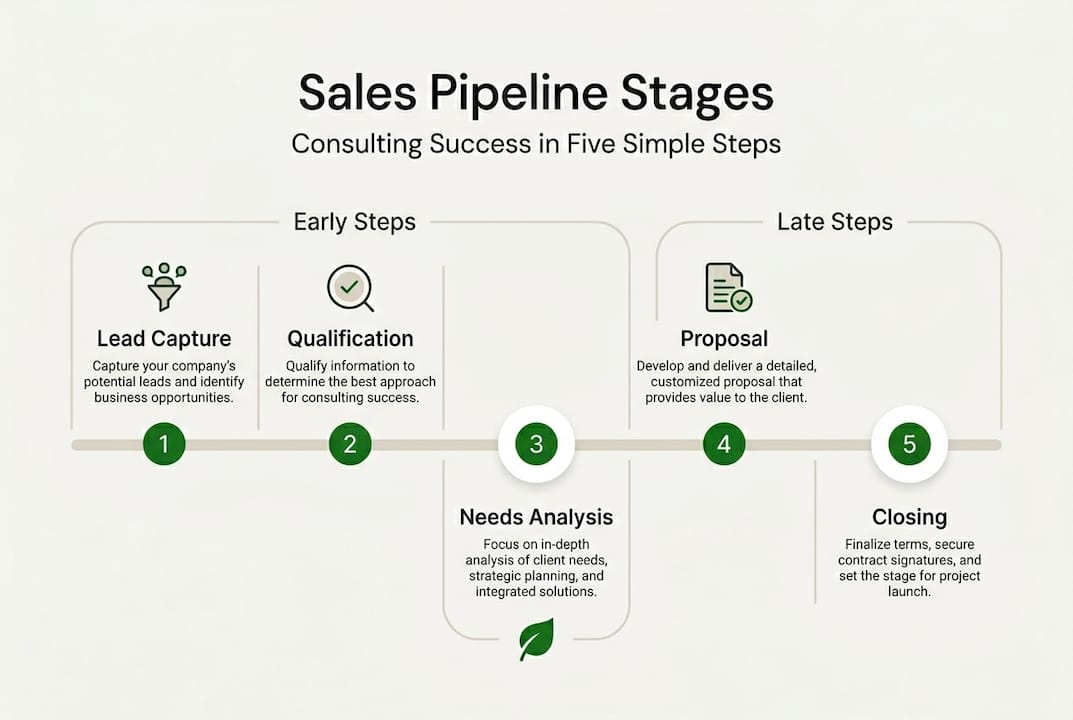
Most service-based businesses use five core stages. Lead capture happens when someone enters your world through networking, referrals, or outbound outreach. Qualification follows, where you determine if they’re a good fit for your services. The meeting stage involves discovery calls or consultations to understand their needs. Proposal comes next, where you present your solution and pricing. Finally, closing is when they sign and become clients.
Visualizing prospects this way gives you immediate clarity on your business health. You can see if you have enough leads entering the top, whether prospects are stalling at specific stages, or if you need to focus more energy on closing deals already in motion. This visibility helps you forecast revenue more accurately than guessing based on conversations or hoping referrals materialize.
The real power comes from consistent use. A sales process for solopreneurs works because you commit to tracking every opportunity and moving it forward systematically. Complexity kills adoption. Your pipeline should be simple enough that you actually update it weekly without resistance.
Common sales pipeline stages explained:
- Lead captured: Contact information collected, initial interest expressed
- Qualified: Budget, authority, need, and timing confirmed as aligned
- Meeting scheduled: Discovery call or consultation booked on calendar
- Proposal sent: Detailed scope, deliverables, and pricing delivered
- Negotiation: Terms, timeline, or pricing being discussed
- Closed won: Contract signed, payment received or scheduled
- Closed lost: Opportunity ended without conversion
Why sales pipelines matter for freelancers and consultants
Without a pipeline, you’re operating reactively. You chase whoever reaches out, forget to follow up with warm prospects, and suddenly realize you have no projects lined up for next month. This feast and famine cycle destroys financial stability and creates constant stress about where your next client will come from.
A structured pipeline changes everything. You know exactly how many prospects you’re working with, which ones need immediate attention, and what actions will move them forward. Instead of scrambling when work dries up, you see the gap forming weeks in advance and adjust your outreach accordingly. This predictability transforms how you run your business.
“Structured sales systems boost conversions by over 30% and enable revenue forecasting that helps service professionals plan capacity and avoid revenue gaps.”
The conversion improvement comes from better follow-up and prioritization. When you track prospects in a pipeline, you naturally focus energy on the warmest opportunities instead of spreading yourself thin. You remember to send that follow-up email three days after the proposal. You notice when someone goes quiet and re-engage before they forget about you entirely.

Time management improves dramatically too. Dedicating roughly 20% of your weekly hours to pipeline activities, outreach, follow-ups, and reviews, prevents the panic of empty calendars. This consistent investment feels manageable compared to the exhausting sprint of trying to fill your pipeline from zero when projects end. A solid client acquisition strategy builds on this foundation.
Top benefits freelancers and consultants gain from pipelines:
- Predictable revenue through visibility into upcoming deals and potential gaps
- Reduced stress from knowing exactly where your next clients are coming from
- Better client quality by focusing on prospects who fit your ideal profile
- Improved follow-up consistency that prevents warm leads from going cold
- Data-driven decisions about where to invest outreach and marketing energy
- Capacity planning that helps you avoid overcommitting or underutilizing your time
The sales tactics for freelancers that work best all depend on having this systematic foundation in place first.
How to build and manage a simple sales pipeline tailored for your business
Building your pipeline doesn’t require fancy software or complicated setup. Start with clarity on your stages, pick a tool you’ll actually use, and commit to weekly maintenance. Here’s the exact process.
Step-by-step pipeline setup:
- Select your pipeline tool. Choose between a spreadsheet (Google Sheets or Excel) or a lightweight CRM like Streak, Pipedrive, or HubSpot’s free tier. Spreadsheets work great for under 50 active prospects. CRMs add automation and reminders but require more setup time.
- Define your stages. Map your actual sales process, not some idealized version. If you typically have an intro call, then send a proposal, then negotiate terms, those are your stages. Keep it to five or six maximum.
- Input current prospects. Add everyone you’re currently talking to, even if conversations are early. Include their contact info, company, estimated deal value, and current stage. This creates your baseline.
- Automate top-funnel tasks. Set up email templates for common outreach messages, follow-ups, and proposal delivery. Freelancers should prioritize simple tools and automate top-funnel tasks to save time on repetitive communication.
- Schedule weekly pipeline reviews. Block 30 minutes every Friday or Monday to update stages, add new leads, remove dead opportunities, and plan your outreach for the coming week. This rhythm keeps your pipeline healthy.
Pro Tip: Limit your pipeline review to 30 minutes maximum. Longer sessions lead to procrastination and analysis paralysis. Focus on action items: who needs a follow-up, what proposals are pending, where you need more leads.
The right tool depends on your workflow and technical comfort. Here’s how popular options compare for service-based solo professionals.
| Tool | Best For | Key Advantage | Main Limitation |
|---|---|---|---|
| Google Sheets | Starting out, under 30 prospects | Free, flexible, no learning curve | Manual updates, no automation |
| Streak | Gmail users, simple needs | Lives in inbox, easy pipeline view | Limited reporting, Gmail only |
| Pipedrive | Growing consultants, 50+ prospects | Visual pipeline, strong automation | Monthly cost, steeper learning curve |
| HubSpot Free | Content creators, inbound focus | Free CRM with email tracking | Complex interface, feature overload |
Keep your system simple enough that you actually maintain it. A basic spreadsheet you update religiously beats an advanced CRM you ignore. The goal is consistent visibility and action, not perfect data architecture. Learn more about running your consulting business efficiently with AI to support your pipeline work.
As you build confidence, add automation for repetitive tasks. Email sequences for new leads, reminder notifications for follow-ups, and template proposals all save hours weekly. Just ensure automation enhances your personal touch rather than replacing it entirely. Review your outbound campaign checklist to maximize your top-funnel efficiency.
Common mistakes to avoid and tips for optimizing your sales pipeline
Even with a pipeline in place, certain habits sabotage your results. The most common mistake is overcomplicating your system with too many stages, custom fields, or tracking metrics you never actually use. This creates friction that makes you avoid updating your pipeline altogether.
Neglecting pipeline hygiene is equally damaging. Enforcing pipeline hygiene practices like weekly reviews prevents your pipeline from filling with stale leads that distort your forecasting. Dead opportunities sitting in your system for months make it impossible to see your real situation clearly.
Ignoring the data your pipeline provides wastes its strategic value. If prospects consistently stall at the proposal stage, that signals a pricing or positioning problem. If you’re closing 50% of qualified leads but struggling to fill the top of your funnel, you need more outreach volume. Your pipeline tells you exactly where to focus improvement efforts.
Lack of consistent follow-up kills deals that should close. Prospects get busy, emails get buried, and good intentions evaporate without systematic reminders. Your pipeline should trigger follow-up actions automatically or through your weekly review process.
Pro Tip: Remove prospects who haven’t responded in 60 days from your active pipeline. Move them to a separate “nurture” list you can re-engage quarterly. This keeps your working pipeline focused on real opportunities that deserve immediate attention.
Balance automation with personal outreach carefully. Automated email sequences work great for initial contact and early nurturing, but high-value service sales require human connection. Use automation to create efficiency, not to replace the relationship building that closes consulting deals.
Pipeline metrics guide optimization over time. Track your conversion rate at each stage, average time prospects spend in each phase, and overall win rate. These numbers reveal bottlenecks and help you test improvements systematically rather than guessing what might work better.
5 practical tips to keep your pipeline healthy and productive:
- Update stages immediately after every prospect interaction to maintain accuracy
- Set calendar reminders for follow-ups rather than relying on memory
- Archive or delete lost opportunities weekly to prevent clutter
- Review your pipeline before planning any new outreach to prioritize existing warm leads
- Track one or two key metrics consistently rather than measuring everything poorly
Regular client pipeline refresh best practices help you maintain momentum even during busy client delivery periods. Strong business development strategies build on this foundation of consistent pipeline management.
Enhance your sales pipeline with expert consulting resources
Building a sales pipeline is just the first step. Maintaining momentum, avoiding revenue gaps, and continuously improving your client acquisition process requires ongoing strategy and support. Generating Pipeline offers specialized resources designed specifically for freelancers, consultants, and fractional executives who want to stop relying on referrals and build systematic client flow.
Our client pipeline refresh guide shows you exactly how to identify and address potential dry periods before they impact your income. The sales process for solopreneurs breaks down every stage with templates, frameworks, and real examples you can implement immediately. For broader growth strategies, explore our business development strategies that integrate pipeline management with positioning, outreach, and delivery excellence.
Frequently asked questions
What are the essential stages in a sales pipeline?
The core stages include lead capture, qualification, meeting or discovery call, proposal delivery, and closing. Lead capture happens when someone enters your world through networking, referrals, or outreach. Qualification confirms they have budget, authority, need, and appropriate timing. The meeting stage involves understanding their specific situation and challenges. Proposal presents your solution and pricing. Closing is when they sign and become a client.
How often should I review and update my sales pipeline?
Review your pipeline weekly, ideally on the same day each week to build a consistent habit. Weekly reviews let you update prospect stages, add new leads, remove stale opportunities, and plan follow-up actions for the coming week. This frequency prevents prospects from falling through cracks while avoiding the time drain of daily pipeline obsession. Missing more than one week creates gaps in follow-up that cost you deals.
What tools work best for freelancers to manage a sales pipeline?
Spreadsheets like Google Sheets work well when starting out or managing under 30 active prospects. Lightweight CRMs like Streak, Pipedrive, or HubSpot’s free tier add automation and reminders as your pipeline grows. The best tool is whichever one matches your workflow and technical comfort level closely enough that you’ll actually maintain it consistently. Complex enterprise software typically creates more friction than value for solo professionals. Explore sales process tools for freelancers to find options that fit your specific needs.
How many prospects should I have in my pipeline at once?
This depends on your average deal size, sales cycle length, and capacity. A consultant closing two clients monthly at $10,000 each needs roughly 8 to 10 qualified prospects in their pipeline assuming a 25% close rate. Larger deals with longer cycles require more prospects to account for the time between initial contact and closing. Track your personal conversion rates and work backward from your revenue goals to determine your ideal pipeline size.
What’s the difference between a sales pipeline and a sales funnel?
A sales funnel shows the volume of prospects at each stage, focusing on conversion rates and drop-off points across your entire audience. A sales pipeline tracks individual opportunities and their specific progress toward becoming clients. Funnels are useful for marketing analysis and identifying systematic bottlenecks. Pipelines are practical tools for managing daily sales activities and forecasting near-term revenue. Service-based businesses benefit most from pipeline thinking because each deal is unique and relationship-driven.
Recommended
- Client Pipeline Refresh: How to Avoid Gaps and Keep Your Revenue Steady – Generating Pipeline
- Sales Process and Optimisation For an Efficient, Repeatable Sales System – Generating Pipeline
- 7 sales tactics for freelancers to grow clients in 2026
- How I Use ChatGPT to Run My Solo Consulting Business Efficiently (2025) – Generating Pipeline
