TL;DR:
- Personalization and proof of credibility significantly increase cold email reply rates for freelancers.
- Using targeted templates like problem-solving or research-backed introductions enhances outreach effectiveness.
- Tracking, testing, and refining email strategies over time ensures better response rates and compliance.
Cold email is one of the most direct ways to land new freelance clients. But most emails get deleted before they’re even read. The average office worker receives over 120 emails per day, so standing out in someone’s inbox takes more than a friendly hello and a link to your portfolio. The good news? With the right template style, smart personalization, and a follow-up plan, cold email can become one of your most reliable client acquisition tools. This guide covers what makes a cold email template actually work for freelancers, which styles perform best, and how to optimize your outreach over time.
Table of Contents
- How to evaluate a cold email template for freelancers
- Top cold email templates for freelancers: Styles and examples
- Cold email template comparison: Which style best fits your freelance business?
- How to track, test, and optimize your cold email outreach
- A fresh perspective: Why most freelancers overlook the real value of cold emails
- Build a client pipeline with proven cold email strategies
- Frequently asked questions
Key Takeaways
| Point | Details |
|---|---|
| Personalization drives results | Freelancers who personalize their cold emails see significantly higher reply rates. |
| Proof is essential | Showcasing client outcomes or case studies boosts credibility and response. |
| Follow-ups increase replies | Most client responses come after the second or third follow-up email. |
| Compliance builds trust | Following CAN-SPAM and GDPR guidelines keeps your outreach ethical and professional. |
| Continuous testing improves pipelines | Tracking and optimizing each outreach campaign ensures steady client growth. |
How to evaluate a cold email template for freelancers
Not all cold email templates are created equal. Before you copy-paste something from a Google search, it’s worth knowing what separates a template that gets replies from one that gets ignored.
Here are the four core criteria to evaluate any freelance cold email template:
- Personalization. Generic emails feel lazy, and prospects can tell immediately. Good templates leave room for specific details: the recipient’s company, a recent post they wrote, or a business challenge relevant to their industry. You can do this manually or use AI tools. AI personalization has been shown to push reply rates from 2.3% to 11.7%, which is a massive lift for a small change in your process.
- Proof and credibility. Your template needs to answer the unspoken question every prospect has: “Why should I trust you?” A specific result (like “I helped a SaaS company reduce churn by 22%”) beats vague claims like “I’m an experienced consultant” every time. One case study or client result woven naturally into the email goes a long way.
- Compliance. Cold email has legal requirements, specifically CAN-SPAM in the US and GDPR for European recipients. Always use a custom domain (not Gmail or Hotmail), include a clear opt-out option, and avoid misleading subject lines. Skipping this step can damage your sender reputation and land your emails in spam.
- Follow-up strategy. A single email rarely closes a deal. In fact, 80% of responses come after the second email. Build a sequence of two to four touchpoints into your outreach plan from the start.
Pro Tip: Before sending any template at scale, read it out loud. If it sounds robotic or salesy even to your own ears, it will feel the same way in someone’s inbox.
A strong template is only part of the picture. You also need a solid sending infrastructure and a clear offer. Check out this cold email campaign guide for a full breakdown of how to set up your outreach from scratch, and use this email campaign checklist to make sure nothing falls through the cracks before you hit send.
Top cold email templates for freelancers: Styles and examples
With evaluation criteria in mind, let’s examine the top template styles you can adapt for client outreach. Each one suits a different situation, so pick based on where you are in the relationship and what you know about the prospect.
- The problem-solver email. This is the workhorse of freelance cold outreach. You identify a specific problem the prospect is likely facing, position yourself as someone who has solved it before, and back it up with a proof point. This approach works because it’s immediately relevant. Problem-solver positioning with proof can drive fast results, with some freelancers landing $5k clients within 48 hours of sending. Keep it to three short paragraphs: problem, proof, ask.
- The research-backed introduction. This template opens with something specific you noticed about the prospect’s business. A job posting on their site, a funding announcement, a podcast episode they appeared on. It signals that you did your homework, which instantly builds trust. The ask is light: a conversation, not a commitment.
- The value-add email. Great for long-game relationships. Instead of pitching your services directly, you lead with something genuinely useful: a resource, a quick audit, a relevant insight. You’re not asking for anything yet. This works especially well in relationship-heavy niches like executive coaching or brand strategy.
- The urgency trigger email. Timed to a specific event, like a funding round, a new job posting for a role you cover, or a product launch. The timing is the hook. You’re reaching out because something just happened, which makes your message feel timely rather than random.
- The follow-up sequence. Not a standalone template, but a series. Each follow-up adds a new angle: a different result, a new resource, or a simple “just checking in” nudge. Space them three to five days apart.
“The best cold email you can send is the one that makes the prospect feel like you wrote it just for them.” That’s the standard to aim for, even when you’re using a template.
Pro Tip: Rotate between two or three template styles across your outreach. Some prospects respond to urgency, others to value. Mixing styles also protects your sender reputation. Get more angles from this email swipe file or review the full cold emailing steps guide for consultants.
Cold email template comparison: Which style best fits your freelance business?
After seeing template styles, it’s useful to compare them side by side for the best strategic fit. Here’s a quick breakdown:
| Template style | Best for | Risk | Must-have element |
|---|---|---|---|
| Problem-solver | Freelancers with clear proof points | Feels pushy without a result | Specific client result or metric |
| Research-backed intro | High-value, targeted outreach | Time-intensive to personalize | A real, specific observation |
| Value-add | Relationship-driven niches | Slow to convert | Genuinely useful content or insight |
| Urgency trigger | Timely events like funding or hiring | Can feel opportunistic | Clear tie to the triggering event |
| Follow-up sequence | Any outreach that hasn’t replied | Over-sending if not spaced well | New angle in each touchpoint |
Choosing the right style comes down to three things: your niche, your proof, and your prospect’s likely mindset.
- If you’re a copywriter or designer, the problem-solver and urgency templates tend to convert fastest because the need is often immediate.
- If you’re a consultant or fractional executive, the research-backed intro and value-add templates build the trust that longer sales cycles require.
- If you’re targeting funded startups, the urgency trigger is your best friend. New funding means new priorities and new budgets.
As a general rule, different templates fit different goals, and follow-ups are what close the loop. Don’t treat the initial email as the whole strategy.
One thing worth noting: relevance is everything. Using the right sales triggers for relevance makes even a simple template feel like it was written specifically for that prospect. And if you want to think bigger picture, mapping your template choice to your client acquisition strategy will help you stay consistent over time.
How to track, test, and optimize your cold email outreach
Once you’ve chosen a template, tracking and optimizing your outreach ensures you get the best results. A great template that you never measure is just a guess.

Here are the key metrics to watch:
| Metric | Healthy benchmark | What to do if it’s low |
|---|---|---|
| Open rate | 40% or above | Test subject lines and send times |
| Reply rate | 5% or above | Improve personalization and proof |
| Positive reply rate | 2% or above | Refine your offer and call-to-action |
| Unsubscribe/complaint rate | Below 0.5% | Tighten your targeting |
Here’s a simple optimization process you can follow:
- Set a baseline. Send your first batch of 20 to 30 emails using one template. Record your open and reply rates.
- A/B test one variable at a time. Start with subject lines. Then test the opening sentence. Then the call-to-action. Change one thing per round so you know what’s actually moving the needle.
- Review at the sequence level. Don’t just look at the first email. Tracking opens and replies across the whole sequence tells you where prospects drop off and where they engage.
- Adjust based on data, not gut. If your open rate is high but replies are low, the subject line is working but the body isn’t. That’s a targeting or proof problem, not a deliverability issue.
- Re-check compliance regularly. Especially if you’re scaling up. Review your opt-out process, sender domain health, and list quality at least once a month.
Pro Tip: Tools like Instantly, Lemlist, or Smartlead give you detailed sequence analytics without a steep learning curve. Pick one and stick with it so your data stays consistent.
For a deeper look at what works in 2026, these sales tactics for freelancers are worth bookmarking alongside your outreach checklist.
A fresh perspective: Why most freelancers overlook the real value of cold emails
Real talk: most freelancers treat cold email like a lottery. Send enough tickets and eventually one pays off. That mindset leads to mass outreach with minimal personalization, which wastes time and burns bridges.
Here’s what I’ve seen work instead. Cold email is most powerful when you treat it as a credibility amplifier. Every email you send is a chance to demonstrate that you understand the prospect’s world better than they expected. When you lead with a specific result and a relevant observation, you’re not just pitching. You’re showing them what it might feel like to work with you.
Volume matters, sure. But proof and value beat volume every time. Freelancers who put client acquisition strategies at the center of their business, rather than treating outreach as an afterthought, consistently outperform those who spray and pray. One tightly crafted email to ten well-researched prospects will almost always outperform one hundred generic blasts.
That’s the shift worth making.
Build a client pipeline with proven cold email strategies
If this article has shown you anything, it’s that cold email done right is less about volume and more about precision. The right template, paired with genuine personalization and a smart follow-up sequence, can turn a cold stranger into a paying client faster than almost any other channel.
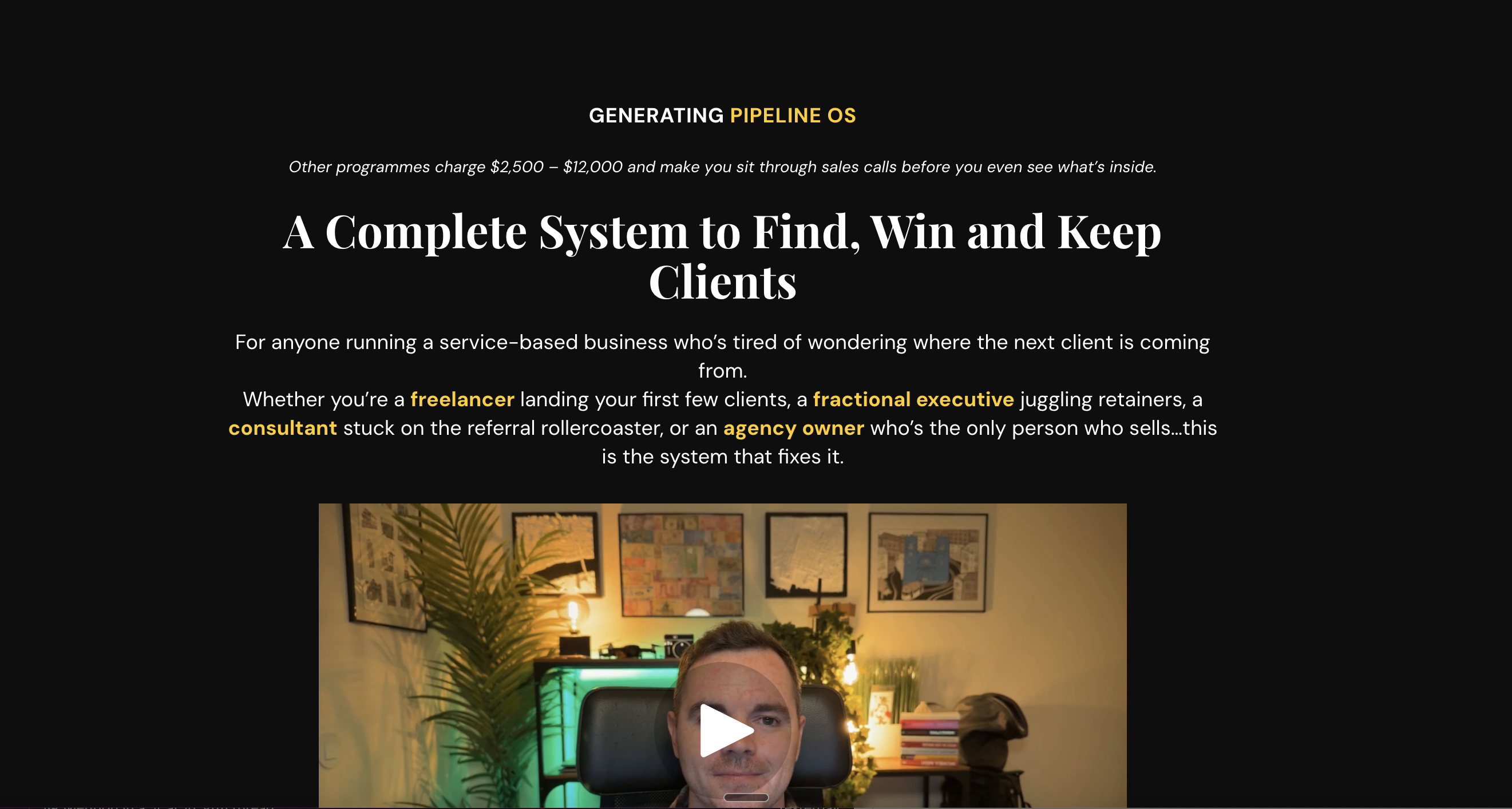
At GeneratingPipeline.com, we’ve built resources specifically for freelancers and consultants who want a consistent, repeatable client pipeline. You can avoid revenue gaps with the right outreach system, learn exactly how to create a client pipeline that compounds over time, and use our step-by-step guide to build email campaigns that actually get replies. No fluff. No hidden pricing. Just practical tools for independent professionals who are serious about growth.
Frequently asked questions
What makes a cold email template effective for freelancers?
An effective template personalizes the message to the recipient, demonstrates credibility through a specific result or case study, and includes a clear, low-friction call-to-action. Personalization and proof are the two biggest drivers of positive replies.
How many follow-ups should freelancers send after the initial cold email?
Two to four follow-ups is the sweet spot. Follow-ups are key because 80% of responses come after the second email, so stopping after the first send means leaving most of your pipeline on the table.
Should freelancers use AI personalization in cold email templates?
Absolutely. AI personalization scales replies significantly, boosting response rates from 2.3% to 11.7%. Even semi-automated personalization using LinkedIn data or company news makes a meaningful difference.
How do freelancers ensure cold emails comply with CAN-SPAM and GDPR?
Use a custom domain, always include an opt-out link, and never use deceptive subject lines or sender information. Compliance is necessary for protecting your sender reputation and staying legally safe across different markets.
