TL;DR:
- Top sales performers listen 57% of the time and guide conversations effectively.
- Asking 11 to 14 questions and extending calls beyond 15 minutes increases closing chances.
- Post-call follow-up with a summary and scheduled next steps is crucial for conversion success.
Most independent business owners think winning on sales calls comes down to being a great talker. Smooth, confident, always ready with the perfect pitch. But that instinct is exactly what’s costing you deals. The reality? Top sales performers listen more than they talk, maintaining a 40 to 50% talk ratio. If you’re spending your calls pitching and explaining, you’re likely talking yourself out of business. This article breaks down the proven habits that separate closers from chasers, with real data and actionable steps you can apply on your very next call.
Table of Contents
- Mastering your talk-to-listen ratio
- Ask the right questions (and enough of them)
- Focus on call duration: Why longer calls close more deals
- Follow-up and next steps: Turning conversations into clients
- The subtle sales shift most business owners miss
- Strengthen your sales pipeline with proven tools
- Frequently asked questions
Key Takeaways
| Point | Details |
|---|---|
| Listen more than you talk | Aim for a 40–50% talk ratio to build trust and increase sales. |
| Prepare plenty of questions | Plan to ask 11–14 targeted questions in every discovery call. |
| Prioritize longer conversations | Calls over 15 minutes result in much higher close rates. |
| Follow up with a plan | Turn calls into clients by recapping, confirming action items, and scheduling next steps. |
Mastering your talk-to-listen ratio
With the challenge framed, let’s start with the single most powerful tweak: how much you should talk (or not talk) on every call.
Here’s something that surprises most people when they first hear it. The best sellers aren’t the ones who dominate the conversation. They’re the ones who guide it. Top performers listen 57% of the time on their calls, keeping their own talk ratio between 40 and 50%. That’s a meaningful shift from what most independent professionals actually do.
Why do business owners over-talk? Usually it’s nerves, or a genuine belief that the more you explain, the more convinced the prospect will be. But prospects don’t buy because they heard a thorough explanation. They buy because they felt understood. When you talk too much, you’re filling space that your prospect needed to tell you exactly what they want.
“Top performers listen 57% of the time. That’s not a passive skill. It’s an active strategy.”
Here are some techniques to practice better listening on every call:
- Mirroring: Repeat the last two or three words your prospect says, then pause. It signals you heard them and invites them to keep going.
- Summarizing: After they share something important, reflect it back in your own words. “So what I’m hearing is…” This builds trust fast.
- Purposeful pausing: Resist the urge to fill silence immediately. A two-second pause after they finish speaking often prompts them to share something even more useful.
- Open-ended questions: Replace yes/no questions with ones that start with “what,” “how,” or “tell me more about.”
- Note-taking: Writing down what they say keeps you focused on listening rather than thinking about what to say next.
Building a repeatable sales process helps you internalize these habits so they become second nature rather than something you have to consciously remember mid-call.
Pro Tip: Record your calls (with permission) and review them. Count how many minutes you talked versus how many minutes your prospect talked. Most people are shocked by the gap. Some tools like Otter.ai or Fireflies can even give you a talk ratio breakdown automatically.
Ask the right questions (and enough of them)
Now that you know how to listen, let’s get into what to ask and how the number of questions can make or break your success.
Good discovery isn’t just about gathering information. It’s about making your prospect feel genuinely heard and helping them articulate a problem they might not have fully put into words yet. That process builds trust faster than any pitch deck ever will.
Research shows you should ask 11 to 14 questions per discovery call to maximize your chances of closing. That might sound like a lot, but spread across a 30-minute conversation, it’s roughly one question every two to three minutes. Very doable.
Here’s a numbered list of question types to work into your discovery calls:
- Needs questions: What’s the core problem they’re trying to solve right now?
- Authority questions: Who else is involved in making this decision?
- Timeline questions: When are they hoping to have this sorted?
- Budget questions: Do they have a range in mind, or is budget still being figured out?
- Motivation questions: Why is solving this a priority right now versus six months ago?
- Previous solutions questions: What have they already tried, and why didn’t it work?
Working through these categories naturally (not robotically) gives you a complete picture of where the prospect actually is. It also helps you tailor your offer to their specific situation rather than delivering a generic pitch.
Check out this prospect discovery call guide if you want a structured framework to follow before your next call.
Pro Tip: Write out your 11 to 14 questions before every call, but treat them as a menu, not a script. The conversation will naturally cover some of them without you having to ask directly. Stay flexible and curious, not mechanical.
Focus on call duration: Why longer calls close more deals
Knowing how to ask and listen is great, but how long should these conversations go to actually win business?
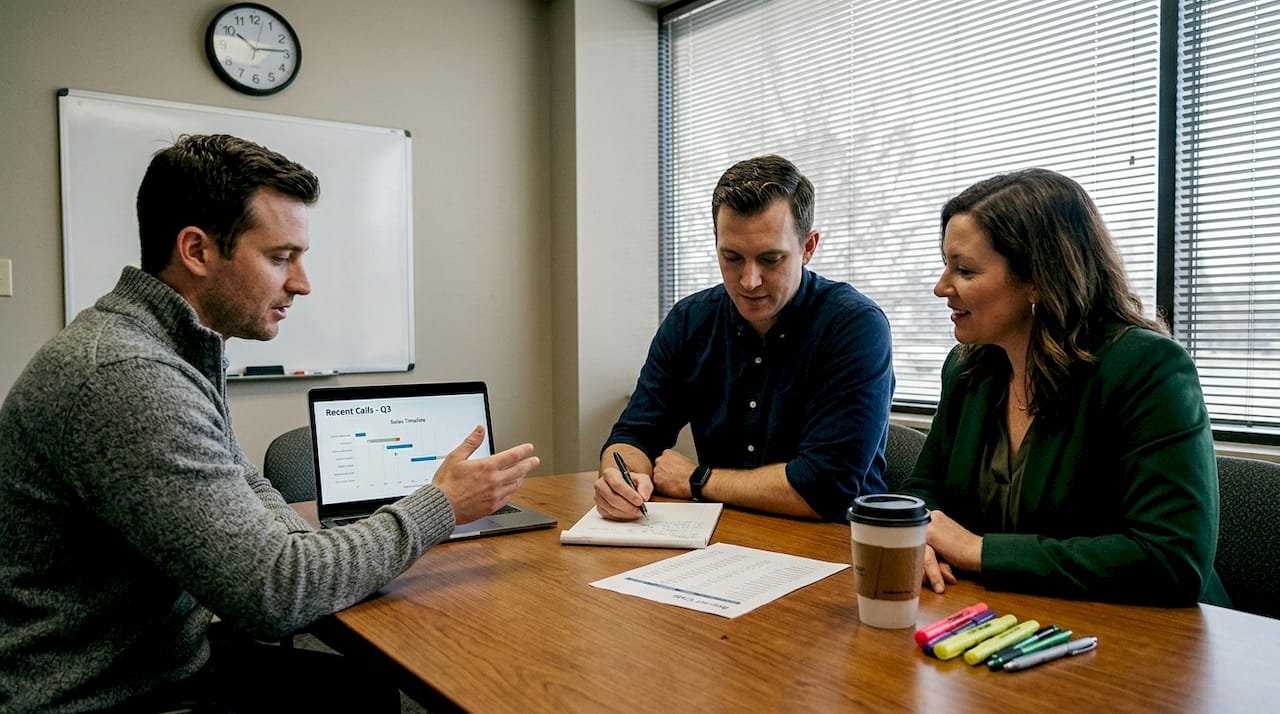
The data here is pretty striking. Calls over 15 minutes close 2.5 times more deals than calls under 5 minutes. That’s not a small difference. It tells you something important: meaningful conversations take time, and rushing through a call to respect someone’s schedule can actually cost you the deal.
Here’s a quick look at how call length affects close rates:
| Call duration | Relative close rate |
|---|---|
| Under 5 minutes | Baseline (lowest) |
| 5 to 15 minutes | Moderate improvement |
| Over 15 minutes | 2.5x higher close rate |
The goal isn’t to drag calls out artificially. It’s to create enough space for a real conversation to happen. Here’s how to structure your calls so they naturally run long enough to be effective:
- Open warmly: Spend two to three minutes on rapport before diving into business. Ask how their week is going. It sets a human tone.
- Explore thoroughly: Use your discovery questions to go deep, not wide. Follow interesting threads rather than rushing to the next question.
- Present with relevance: When you do talk about your offer, tie it directly to what they told you. “You mentioned X, and here’s exactly how we address that.”
- Handle objections calmly: Don’t panic when they push back. Objections are actually a sign of engagement. Explore them with curiosity.
- Close with clarity: End with a clear next step, not a vague “I’ll follow up.”
Using sales call templates can help you build this structure into every call without making it feel scripted.
Follow-up and next steps: Turning conversations into clients
Of course, a great conversation isn’t enough. It’s what you do right after the call that turns a maybe into a yes.
Most independent owners make the same mistake here. They either wait too long to follow up, or they chase without any clear direction. Both approaches feel awkward and often stall the deal. The fix is a structured post-call process that keeps momentum going without being pushy.
For context, B2B close rates average 18 to 22%, with top cold call success sitting around 10.5%. Those numbers tell you that most deals don’t close on the first conversation. Follow-up isn’t optional. It’s where the deal actually lives.
Here’s a simple numbered process to follow after every sales call:
- Summarize the call internally: Jot down the key things they shared, their pain points, timeline, and any objections. Do this within 10 minutes while it’s fresh.
- Send a recap email: Within a few hours, send a short email summarizing what you discussed, what you’re proposing, and why it fits their situation.
- Confirm the next meeting: Don’t leave it open-ended. Include a calendar link or suggest two specific times to reconnect.
- Set clear action items: If they said they’d check with their partner or review your proposal, name that explicitly in your follow-up so they remember.
Here’s a quick comparison of best practices versus common mistakes:
| Best practice | Common mistake |
|---|---|
| Send recap within 24 hours | Wait several days to follow up |
| Confirm next steps in writing | Leave next steps vague |
| Reference specific pain points | Send a generic follow-up email |
| Schedule the next meeting on the call | Say “I’ll be in touch” with no date |
| Track deal status in a simple CRM | Rely on memory or scattered notes |
A step-by-step sales process gives you a repeatable system so nothing falls through the cracks after a promising call.
The subtle sales shift most business owners miss
Now that you’ve seen the proven techniques, here’s a perspective most sales articles miss.
I’ve watched a lot of independent professionals chase the perfect opener, the magic objection handler, or the one closing line that seals every deal. And honestly? That search is a distraction. The sellers who consistently win aren’t doing anything flashy. They’re just really good at the basics, every single time.
Listening well. Asking thoughtful questions. Following up with clarity. These aren’t glamorous skills. But they compound. Each call you approach with genuine curiosity rather than performance anxiety becomes a little easier. A little more natural. And over time, your close rate climbs not because you found a silver bullet, but because you stopped making the small mistakes that quietly kill deals.
The mindset shift I’d encourage is this: stop thinking of each sales call as a test you pass or fail, and start treating it as a practice in curiosity. You’re there to understand someone’s situation, not to impress them. That shift alone changes how you show up, and prospects feel it.
If you want to go deeper on applying this mindset practically, the sales tactics for freelancers guide is a solid next read.
Strengthen your sales pipeline with proven tools
Applying these sales call tips will absolutely move the needle. But the calls themselves are just one piece of the puzzle. A strong pipeline means you’re always walking into those calls with well-qualified prospects, not scrambling to fill your calendar.
At GeneratingPipeline.com, we’ve built resources specifically for independent business owners who want a consistent, repeatable client pipeline. Whether you want to avoid revenue gaps between projects, learn how to create a client pipeline that runs without referrals, or grab a free guide packed with revenue boosters you can use immediately, there’s a clear next step waiting for you. The goal is simple: better calls, better pipeline, more clients.
Frequently asked questions
What is the ideal talk-to-listen ratio on a sales call?
Top sales performers spend 40 to 50% of the call talking and listen for about 57% of the conversation. Listening more is one of the simplest ways to improve your close rate.
How many questions should I ask during a discovery call?
Aim to ask between 11 and 14 questions per discovery call to maximize your chances of closing the deal. Spread naturally across the conversation, this number builds trust and surfaces the information you need.
Do longer sales calls actually lead to more sales?
Yes. Calls over 15 minutes have 2.5 times higher close rates than those under 5 minutes. Longer calls signal a deeper, more engaged conversation, which is where real buying decisions happen.
What should I do right after a sales call?
Send a recap email within a few hours, confirm next steps in writing, and schedule the follow-up meeting before the prospect goes cold. Structure beats good intentions every time.
What is a strong close rate for B2B sales calls?
B2B close rates average 18 to 22%, with top cold call success sitting around 10.5%. Knowing these benchmarks helps you set realistic expectations and measure your own progress accurately.
Recommended
- Quick win sales tactics: Fast client acquisition strategies
- Create a step-by-step sales process to win more clients
- 7 sales tactics for freelancers to grow clients in 2026
- Business Development: 7 Practical Client Acquisition Strategies
- Inherited Property Cold Calling Practice — AI Roleplay for Real Estate Investors & Wholesalers
