TL;DR:
- A structured, repeatable sales process provides clarity, steadies income, and reduces fluctuations.
- Following each sales stage intentionally improves conversion rates and avoids common pitfalls like skipping qualification.
- Regular review and adaptation of the sales process ensure continued effectiveness for solo consultants.
If you’ve ever ended a great client project only to find your pipeline completely empty, you already know the frustration. Consulting revenue can feel wildly unpredictable when you’re relying on referrals, occasional word of mouth, or just hoping someone reaches out. The good news? That unpredictability isn’t permanent. A structured, repeatable consulting sales process changes everything. It gives you clarity on where your next client is coming from, steadies your income, and removes the panic that comes with feast-or-famine cycles. This guide walks you through every stage, from setup to execution to troubleshooting, so you can build something that actually works for you.
Table of Contents
- Understand the stages of a consulting sales process
- Preparation: Essential tools, materials, and mindset
- Execution: Step-by-step instructions to build your consulting sales process
- Verification: Common mistakes and how to troubleshoot your process
- Why one-size-fits-all advice falls short for solo consultants
- Scale your consulting sales process with expert resources
- Frequently asked questions
Key Takeaways
| Point | Details |
|---|---|
| Map every sales stage | Visualizing your process helps spot gaps and ensures steady progress toward converting clients. |
| Prepare tools and templates | Centralized resources and a structured approach save time and prevent missed opportunities. |
| Follow step-by-step execution | A repeatable sequence increases your close rate and builds reliability in your pipeline. |
| Troubleshoot for steady improvement | Routine pipeline review and error-checking help you avoid costly mistakes and keep revenue flowing. |
| Customize your approach | Solo consultants see best results when personalizing their sales process for their target audience. |
Understand the stages of a consulting sales process
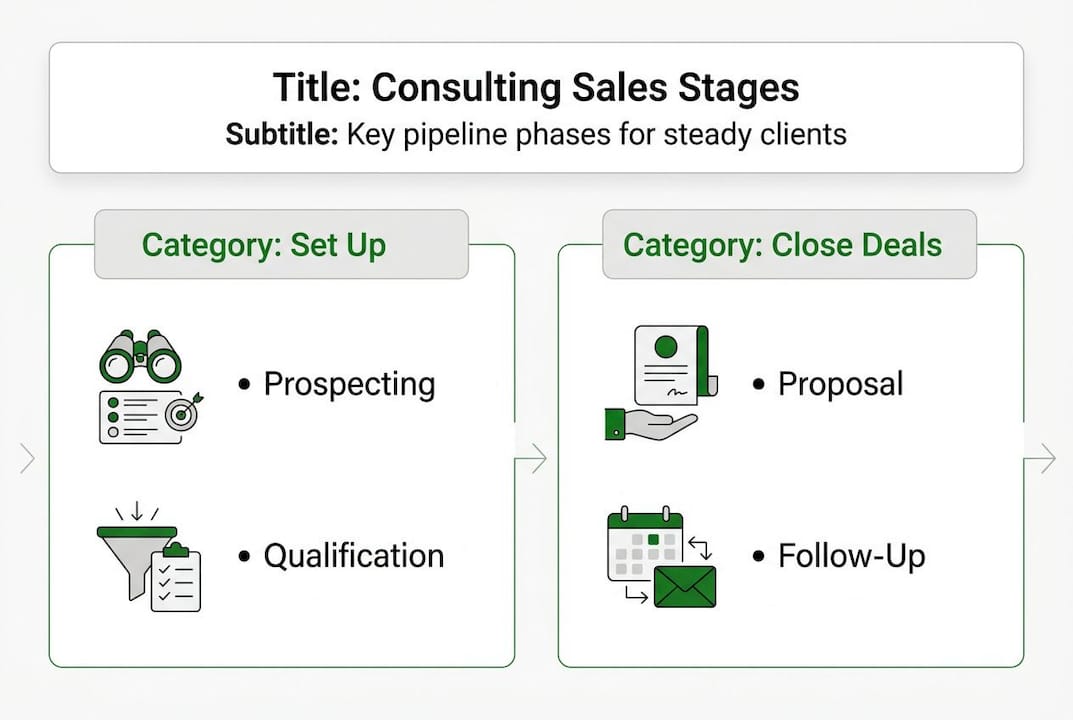
Before you can fix or improve anything, you need a clear map of what a consulting sales process actually looks like. Consulting sales involves multiple defined stages that move a prospect from “never heard of you” to “signed contract.” Most freelancers skip at least one of these stages and wonder why deals fall apart.
Here are the core stages and the key outcome you should aim for at each one:
- Prospecting: Identify potential clients who match your ideal profile. Outcome: a qualified list of targets.
- Qualifying: Confirm the prospect has a real problem, budget, and decision-making authority. Outcome: no wasted time on bad-fit leads.
- Proposing: Present your solution clearly and compellingly. Outcome: a proposal that speaks directly to their pain.
- Negotiating: Align on scope, price, and timeline. Outcome: mutual agreement before the contract is signed.
- Closing: Get the signed agreement and first payment. Outcome: a new client relationship begins.
- Nurturing: Stay in touch post-project for referrals and repeat business. Outcome: long-term revenue from existing relationships.
Here’s a quick comparison of how consulting and freelancing sales stages typically differ:
| Stage | Consulting sales | Freelancing sales |
|---|---|---|
| Prospecting | Strategic, niche-focused outreach | Broad platforms, job boards |
| Qualifying | In-depth discovery calls | Quick chat or form submission |
| Proposing | Custom, value-based proposals | Standard rate cards |
| Negotiating | Scope and ROI discussion | Price negotiation only |
| Closing | Formal contract and onboarding | Simple agreement or invoice |
| Nurturing | Ongoing relationship management | Rare or ad hoc |
The biggest difference? Consultants who follow a step-by-step sales process treat each stage as intentional. Freelancers often skip straight from a quick chat to sending an invoice, missing critical trust-building moments in between.
If you want to understand how each stage fits into a broader pipeline, the sales pipeline stages guide is worth bookmarking. It breaks down what should happen at each point and how to move deals forward without pressure.
Preparation: Essential tools, materials, and mindset
Once you know the stages, set yourself up for success with the right preparation. Proper preparation speeds up the consulting sales cycle and reduces the mental load of trying to remember where every prospect stands.

Here’s a look at the tools that make the biggest difference and the outcomes they support:
| Tool | Purpose | Typical outcome |
|---|---|---|
| CRM (e.g., HubSpot, Notion) | Track prospects and pipeline stages | Fewer dropped leads |
| Email templates | Speed up outreach and follow-up | Consistent messaging |
| Proposal software | Create polished, professional proposals | Higher close rates |
| Calendar scheduling tool | Reduce back-and-forth booking | Faster discovery calls |
| Follow-up reminders | Automate nudges for non-responders | More replies, more deals |
Beyond tools, your mindset matters just as much. Here are the shifts that solo consultants need to make:
- Selling is serving. When you reach out to a prospect, you’re offering help, not bothering them.
- Rejection is data. A “no” tells you something useful about your targeting or messaging.
- Consistency beats intensity. Doing a little outreach every day beats a big push once a month.
- You are the product. Your credibility, communication, and follow-through are what clients are buying.
Pro Tip: Centralize everything in one place. Whether it’s a CRM or a simple Notion board, track every prospect, every conversation, and every follow-up date. You will forget things otherwise, and missed follow-ups are missed revenue. Check out consulting sales secrets for more on building systems that keep you organized without eating your whole day.
Execution: Step-by-step instructions to build your consulting sales process
With preparation handled, now execute your sales process with confidence. A stepwise sales process leads to higher conversion rates in consulting, and the structure below gives you a repeatable sequence you can run every week.
- Define your ideal client profile. Get specific. Industry, company size, role, pain point, budget range. The more precise you are, the easier prospecting becomes.
- Build your prospect list. Use LinkedIn, industry directories, or your existing network. Aim for 20 to 30 new names per week to keep your pipeline healthy.
- Send personalized outreach. Reference something specific about the prospect. Generic messages get ignored. Personalized ones get replies.
- Run a structured discovery call. Ask questions about their goals, challenges, timeline, and budget. Listen more than you talk. This is your qualifying stage.
- Send a tailored proposal. Address their specific problem, your solution, the outcomes they can expect, and your investment. Keep it clear and concise.
- Follow up consistently. Most deals close after the third or fourth touchpoint. Use a simple sequence: follow up two days after the proposal, then five days later, then ten days later.
- Close with confidence. Ask for the business directly. Something like, “Does this feel like the right fit for you?” works better than waiting for them to come to you.
- Nurture past clients. Check in every 60 to 90 days. Share a useful resource, ask how things are going. This keeps you top of mind for repeat work and referrals.
Pro Tip: Create templates for your proposals and follow-up emails. You don’t need to write from scratch every time. Customize the key details, but keep the structure consistent. This saves hours every week and keeps your messaging sharp.
For more depth on client acquisition strategies and how to build outreach that actually converts, it’s worth exploring business development strategies designed specifically for solo operators.
Verification: Common mistakes and how to troubleshoot your process
After executing, make sure you’re not falling into common traps that undermine your sales process. Mistakes in consulting sales can reduce close rates by up to 25%, and most of them are avoidable once you know what to look for.
Here are the most common mistakes solo consultants make:
- Skipping qualification. Spending hours on a proposal for someone who can’t afford you or doesn’t have real decision-making power is a time drain. Always qualify first.
- Inconsistent follow-up. Sending one email and giving up is not a follow-up strategy. Most prospects need multiple touchpoints before they’re ready to move.
- Unclear pricing. Vague pricing creates confusion and erodes trust. Check out pricing strategy tips to sharpen how you present your rates.
- Pitching too soon. If you jump into your services before understanding the prospect’s problem, you’ll sound like every other salesperson they’ve ignored.
- No pipeline review. If you’re not looking at your pipeline weekly, you’re flying blind. You won’t catch stalled deals or missed follow-ups until it’s too late.
“Every missed follow-up is a conversation that never happened. And conversations are where clients are won. If you’re not following up, you’re not selling, you’re just hoping.”
To verify your process is working, run a simple win-loss analysis every month. Look at the deals you won and ask why. Look at the ones you lost and ask the same. Patterns will emerge quickly. You can also use freelancer sales tactics to benchmark your approach against what’s working for others in similar positions.
A healthy pipeline review covers three things: how many prospects are at each stage, how long deals are sitting without movement, and what your conversion rate looks like from one stage to the next. If deals are stalling at the proposal stage, your proposal needs work. If they’re dropping off after discovery, your qualifying questions might not be sharp enough.
Why one-size-fits-all advice falls short for solo consultants
Here’s something most guides won’t tell you: a rigid, templated sales process can actually hurt you as a solo consultant. Generic frameworks are built for sales teams with defined roles, not for one person who is the marketer, the closer, and the delivery lead all at once.
The consultants I see winning consistently are the ones who treat their sales process as a living system. They adapt their approach based on the client’s industry, communication style, and urgency. They don’t force every prospect through the same funnel. They read the room.
Automated tools are great for efficiency, but they shouldn’t replace the personal touch that makes consulting relationships stick. A well-timed personal email will almost always outperform a drip sequence. And consultant sales funnels work best when they’re built around your strengths, not copied from someone else’s playbook.
Pro Tip: Every quarter, sit down and review your sales process from top to bottom. What’s working? What feels forced? Adjust accordingly. The best process is the one you’ll actually use consistently.
Scale your consulting sales process with expert resources
Building a repeatable sales process is one of the best investments you can make as an independent consultant. But you don’t have to figure it all out alone.
At GeneratingPipeline.com, we’ve built a set of resources specifically for freelancers, consultants, and fractional executives who want to grow your client pipeline without relying on luck or referrals. Whether you’re looking to avoid revenue gaps between projects or want a structured approach to sales process optimization, there’s something here for you. The Generating Pipeline OS gives you 20 lessons, templates, and frameworks built for solo operators. One payment, lifetime access, no sales calls required.
Frequently asked questions
How do I start building my consulting sales process?
Start by clarifying your ideal client profile, then map out each sales stage and tool you’ll use to move prospects forward. Simple tracking beats no tracking every time.
What are the most common mistakes in consulting sales?
Inconsistent follow-ups, skipping client qualification, and unclear pricing are the top culprits. These lower your conversion rates faster than almost anything else.
What tools can help automate and track my sales process?
A CRM, email templates, and proposal software are the core three. These tools streamline consulting sales and keep your pipeline moving without constant manual effort.
How can I tell if my consulting sales process is working?
Track your conversion rate at each stage and review your pipeline weekly. Pipeline review and win-loss analysis will show you exactly where deals are stalling.
How often should I update my consulting sales process?
Review it every quarter or after a major client engagement. Periodic review keeps your approach sharp and aligned with what’s actually working in your market right now.
Recommended
- Create a step-by-step sales process to win more clients
- Consultant sales funnels: attract and convert clients reliably
- Sales Process and Optimisation For an Efficient, Repeatable Sales System – Generating Pipeline
- A Proven Client Acquisition Strategy for Fractional Executives and Consultants – Generating Pipeline
