TL;DR:
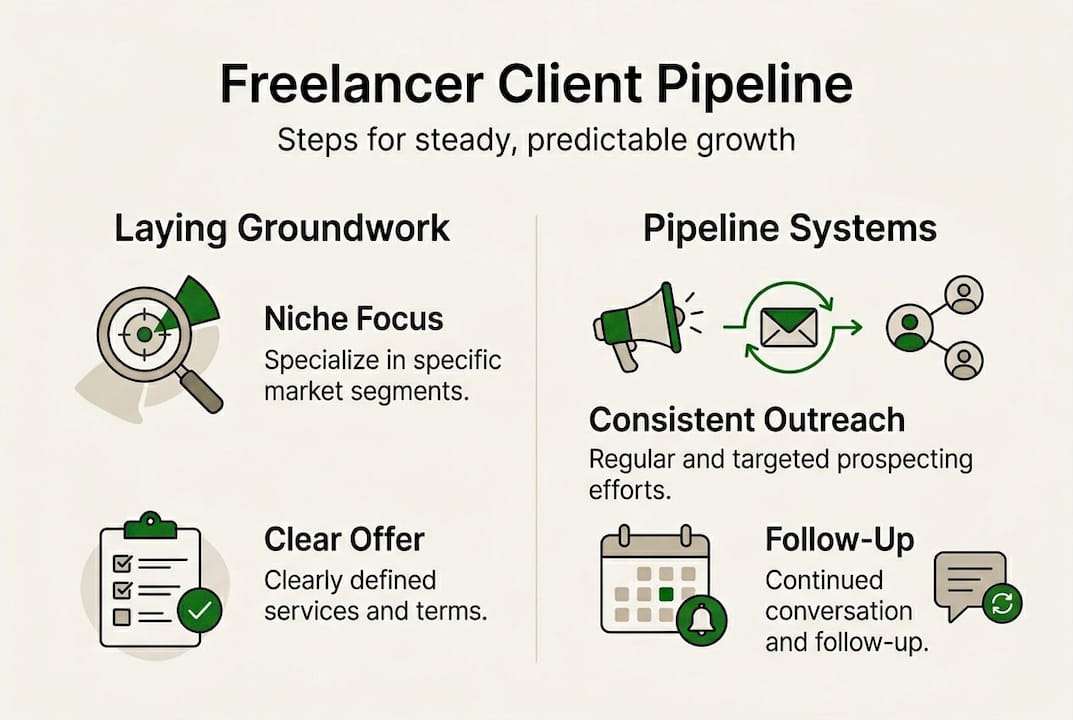
- Freelancers should develop a clear niche, service packages, and strong assets before outreach.
- Consistent proactive outreach, personalized follow-ups, and systems for repeat business ensure steady client acquisition.
- Most freelancers struggle with consistency rather than lead generation, and treating sales as a skill improves results.
Freelance work can feel like you’re constantly chasing your next paycheck. One month you’re slammed with projects, the next you’re staring at an empty inbox wondering where everyone went. If you’ve been relying on referrals and the occasional warm introduction to keep things moving, you already know how fragile that is. The good news? There’s a better way. This guide walks you through a structured, repeatable approach to client acquisition that actually works in 2026, so you can stop crossing your fingers and start building something reliable.
Table of Contents
- Lay the groundwork: Preparing your freelance business for client acquisition
- Consistent outreach: Sustainable methods to find new clients
- Turning conversations into clients: Effective follow-up and closing
- Keep the pipeline full: Systems for ongoing success and repeat business
- Why most freelancers struggle with client acquisition and what actually works
- Ready to build a pipeline that brings clients to you?
- Frequently asked questions
Key Takeaways
| Point | Details |
|---|---|
| Preparation matters | A clear offer and profile set the stage for successful client outreach. |
| Systematic outreach wins | Consistent, targeted outreach delivers more clients than relying on word-of-mouth. |
| Follow-up is essential | Polite persistence in follow-up communications significantly increases client conversions. |
| Build for stability | Creating repeatable systems keeps your freelance business pipeline full year-round. |
Lay the groundwork: Preparing your freelance business for client acquisition
Before you can start reaching out, you need to make sure you’re set up for success. A lot of freelancers skip this step and go straight to pitching. Then they wonder why nobody’s biting. The truth is, if your positioning is fuzzy, even the best outreach won’t land.
Start with your niche and your ideal client. Who do you help, with what, and why does it matter to them? The more specific you are, the better. Well-defined service offerings and a clear client profile increase response rates, which means the effort you put into outreach actually pays off.
Next, look at your packages and pricing. Vague offerings like “I do design” or “I write content” don’t give prospects a reason to say yes. Package your services around specific outcomes. Explore pricing strategy examples to see how structuring your offers clearly can make a real difference to conversions. And if you want to reduce income swings down the line, think about how diverse revenue streams might fit into your mix.
Here’s a quick look at the essential assets every freelancer should have ready before pitching:
| Asset | Why it matters |
|---|---|
| Portfolio | Demonstrates proof of past results |
| Testimonials | Builds trust with skeptical buyers |
| LinkedIn profile | Primary channel for B2B visibility |
| Website or landing page | Central hub for inbound interest |
| Clear service packages | Removes friction from the buying process |
When you’re putting this together, focus on these core preparation steps:
- Define your niche clearly: pick an industry, role, or problem you specialize in
- Build your social proof: even 2-3 strong testimonials will do the work for you
- Polish your LinkedIn: headline, about section, and featured posts should all reinforce your value
- Create tiered packages: give prospects easy options at different investment levels
Pro Tip: Align every package to a specific pain point your ideal client is already losing sleep over. If your offer matches a real problem they’re trying to solve, the conversation gets a lot easier.
Consistent outreach: Sustainable methods to find new clients
With your business foundation in place, it’s time to fuel your pipeline with steady outreach. This is where a lot of freelancers go wrong. They burst out a few emails or LinkedIn messages when work dries up, then stop when things pick back up. That creates the feast-or-famine cycle you’re trying to break.
Proactive outreach is more reliable for steady client acquisition than passive referrals, which means you need to build outreach into your weekly routine, not just treat it as a panic move.
There are two main lanes here: warm outreach and cold outreach. Both have their place.
| Warm outreach | Cold outreach | |
|---|---|---|
| Effort level | Lower | Higher |
| Trust level | Already established | Needs to be built |
| Speed to response | Faster | Slower |
| Examples | Past clients, referrals, event connections | Cold email, LinkedIn DMs to new prospects |
| Best for | Quick wins and reactivation | Scaling reach beyond your network |
Here’s a simple step-by-step to get your outreach running consistently:
- Research your target accounts: use LinkedIn, industry directories, or job boards to identify decision-makers
- Build a prospect list: aim for 20-50 new prospects per week depending on your capacity
- Personalize your message: reference something specific about their business or recent activity
- Track every touchpoint: use a simple CRM or even a spreadsheet to log contacts and status
- Follow up on a schedule: don’t rely on memory; set reminders for every open conversation
To dig deeper into sustainable client acquisition strategies built for solo operators, it helps to look at frameworks designed specifically for independent professionals.
Pro Tip: Batch your outreach tasks. Block 30-60 minutes two or three times a week specifically for prospecting. Use templates for the repetitive parts, but always personalize the first line. That balance saves time without killing your response rates. For more on how to execute this well, the sales tactics for freelancers guide covers practical formats you can use right away.
Turning conversations into clients: Effective follow-up and closing
Reaching out is only half the battle. Now turn interest into signed contracts. This is where a lot of great outreach goes to waste. You get a reply, have a promising chat, and then… nothing. The prospect goes quiet and you don’t know what to do next.

Following up multiple times increases your chances of landing clients by over 50%, which is reason enough to build a follow-up system you’ll actually stick to.
Here’s what good follow-up looks like in practice:
- Be timely: follow up within 24-48 hours of any interaction
- Add value each time: share a relevant article, a quick insight, or a short case study
- Keep it short: a few lines is enough; you’re not writing a proposal in the follow-up email
- Reference the last conversation: show you were paying attention to what they said
- Set a clear next step: every follow-up should end with one simple ask (a call, a reply, a decision)
For closing freelance deals, having a structured proposal and a simple call framework makes a big difference. On your discovery call, focus on listening first. Ask about their goals, their current situation, and what’s getting in the way. Then position your offer as the bridge between where they are and where they want to be.
Common objections you’ll run into:
- “Your price is too high”: reframe toward ROI and outcomes, not hours
- “We’ll revisit this next quarter”: ask what would need to be true to move forward sooner
- “We’re already working with someone”: acknowledge it and stay warm for the future
Getting your pricing for closing deals right is also part of this stage. If your pricing signals strong value and filters out the wrong clients, you spend less time chasing and more time closing.
“The best closers aren’t the most aggressive. They’re the most prepared and the most patient. They follow up because they genuinely believe they can help, and that comes through.”
Keep the pipeline full: Systems for ongoing success and repeat business
Consistent execution helps win clients, but real growth comes from systems that keep you top-of-mind with prospects. This is the part most freelancers skip. They land a client, go heads-down on delivery, then surface weeks later wondering why their pipeline dried up again.
Building systems removes that dependency on willpower. Here’s how to set it up:
- Automate what you can: use tools like a simple CRM or email scheduling to send follow-ups and check-ins without manual effort
- Create a nurture sequence: for warm leads who aren’t ready yet, send one valuable touchpoint per month (a tip, a resource, a quick update on your work)
- Schedule pipeline reviews: once a week, spend 20 minutes reviewing your active prospects and deciding on next steps
- Systemize your onboarding: a smooth first experience turns one-time clients into repeat buyers
- Ask for referrals at the right moment: right after you deliver a strong result is the best time
For keeping revenue streams for freelancers healthy over time, repeat clients and retainers are the most efficient path. You’ve already done the hard work of winning their trust. Now make it easy for them to keep working with you.
To stabilize freelance revenue long-term, consider these tactics:
- Offer a monthly retainer option for ongoing support or advisory work
- Create a “next project” conversation before you finish the current one
- Send a quarterly check-in email to past clients with something genuinely useful
- Build a simple email list so you’re not dependent on any single platform to stay in touch
Stat callout: Freelancers with a repeatable pipeline report 41% more predictable revenue. That’s not a small difference. That’s the gap between anxious and in control.
Why most freelancers struggle with client acquisition and what actually works
Here’s the honest truth. Most freelancers don’t have a lead generation problem. They have a consistency problem.
They rely on referrals because referrals feel safe. No rejection, no cold emails, no awkward pitches. But referrals are unpredictable by nature. You can’t scale what you can’t control.
The freelancers who win consistently are the ones who treat sales tactics perspective as a learnable skill, not a personality trait. They show up regularly, follow up without apology, and build genuine relationships over time. They don’t wait for the phone to ring.
The real shift happens when you stop thinking about client acquisition as something that happens to you and start treating it as a process you run. Personalized outreach, timely follow-up, and long-term relationship nurturing all compound over time.
Pro Tip: Instead of sending 50 cold emails this week, practice having 5 real conversations. Work on how you explain what you do, handle objections, and present your proposal. Volume matters less than your conversion rate at each stage of the funnel.
Ready to build a pipeline that brings clients to you?
You now have a clear picture of what it takes to stop relying on luck and start building something consistent. From positioning your offer to running outreach, following up smartly, and creating systems for repeat business, the path is there.
At GeneratingPipeline.com, we help independent business owners like you create a client pipeline that actually runs. Whether you want to avoid revenue gaps or explore the full 7 acquisition strategies that work for solo operators, we’ve got the frameworks and tools ready for you. Start with our free guide: 11 tactics to boost your revenue, no sales call required.
Frequently asked questions
What is the most reliable way to get clients as a freelancer?
A repeatable outreach and follow-up system consistently outperforms passive strategies. Proactive outreach is more reliable for steady client acquisition than referrals alone.
How many follow-ups should you send to potential clients?
Sending 2-4 thoughtful follow-ups is a solid baseline. Following up multiple times increases your chances of landing a client by over 50%, so don’t give up after one message.
How important is pricing in the client acquisition process?
Pricing signals your value and filters the right clients in. Well-defined pricing increases the quality of inbound leads and conversions, so clarity beats being the cheapest option.
How can freelancers generate repeat business from clients?
Systematic communication, strong delivery, and retainer offers are your best tools. Freelancers with repeatable pipelines report 41% more predictable revenue, which starts with how you treat existing clients.
